Step 1: Pre-Inspection Requirements
Proper setup is critical to eliminate external variables that could mimic mechanical misalignment.
Work Surface: Park the machine on a flat, solid, and level surface (preferably a reinforced concrete pad), away from active work zones.
Machine Configuration:
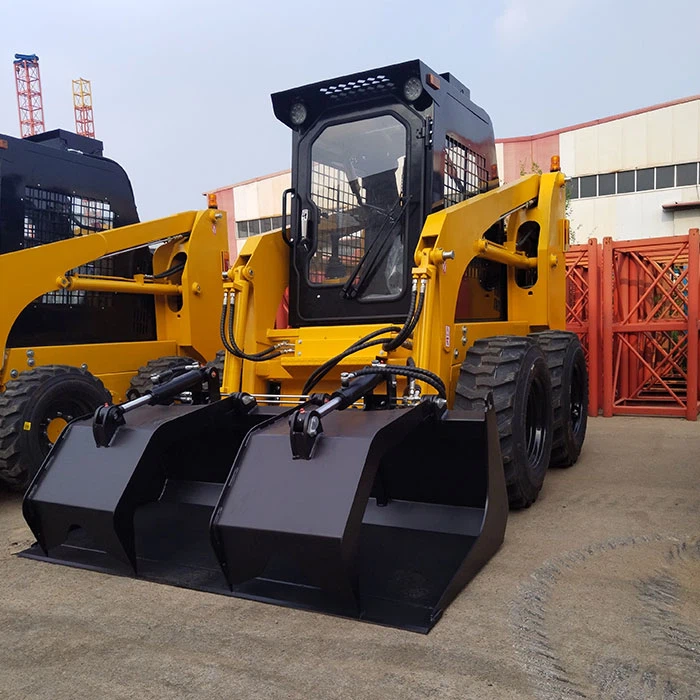
Level the bucket until the bottom is as parallel to the ground as possible.
Lower the loader arms until the bucket makes contact with the ground without lifting the front tires (maintaining a "natural stance").
Tire Maintenance: Ensure all tires are inflated to the exact manufacturer-specified PSI. Uneven tire pressure or significant tread wear differential is the most common cause of "false" misalignment.
Step 2: Visual and Tool-Aided Inspection
1. Cutting Edge Straightness
Visual Sightline: Stand several meters directly in front of the machine. Inspect the entire length of the cutting edge. It should be a perfect straight line with no visible bowing, twisting, or "smiling/frowning" deformations.
String Line / Laser Method: * Place markers on the floor at the outermost corners of the bucket.
Snap a chalk line or pull a high-tension string between these two points.
Measure the gap between the cutting edge and the string at multiple points. The variance should generally not exceed 3mm (1/8 inch), depending on OEM tolerances.
For higher precision, use a rotary laser level projected across the bucket face.
2. Bucket-to-Arm Alignment
3. Floor Plate Flatness
Place a long, precision straightedge (such as an aluminum box level) longitudinally across the interior floor of the bucket.
Check for "daylight" between the straightedge and the floor plate to identify any concavity or crowning.
Step 3: Functional "Scrape Test"
The scrape test is the definitive field method to verify that the linkage geometry is synchronized.
Preparation: Move to a level area with compacted soil or fine gravel (avoid asphalt to prevent unnecessary wear).
Execution: Engage the bucket in the "float" position or apply very light down pressure. Drive the machine forward in a straight line at low speed for 3 to 5 meters.
Analysis of the Scrape Pattern:
Uniform Depth: Ideal result. The cutting edge peels a consistent, thin layer of material across the full width.
Deep on One Side: Indicates a lateral tilt. This usually stems from uneven tilt cylinder linkage, a twisted bucket, or cylinder stroke variance.
Deep in Center: Indicates a "smiling" or concave cutting edge.
Deep on Ends: Indicates a "frowning" or convex cutting edge.
Chattering/Skipping: May indicate localized damage to the cutting edge or structural "hop" in the floor plate.
Step 4: Linkage Inspection and Adjustment
On new machines, misalignment is frequently caused by factory-set variances in the tilt cylinder rod ends (clevises) or the adjustable linkages.
Locate Adjustment Points: Identify the threaded rod ends on the tilt cylinders. These allow for fine-tuning the pitch of the quick-attach mechanism.
Comparative Measurement: Use a caliper or tape measure to verify that the exposed thread length on the left and right cylinders is identical.
Adjustment Procedure:
If the scrape test shows the left side is "heavy" (too deep), you must either shorten the left linkage or lengthen the right.
Incremental Adjustments: Turn the adjustment nut only 1/4 turn at a time.
Symmetry: Ensure adjustments are made incrementally to maintain the mechanical balance of the hydraulic system.
Step 5: Final Validation
Torque Check: Once alignment is achieved, ensure all jam nuts and locking bolts are tightened to the manufacturer's specified torque to prevent drifting during operation.
Cycle Testing: Cycle the bucket through its full range of motion (tilt up, tilt down, lift, and lower). Listen for any binding, unusual hydraulic noise, or "racking" of the loader arms.
Final Scrape: Perform one last scrape test to confirm that the bucket leaves a perfectly level finish.